

The Psychology of UI Design by Growth Design
In the competitive landscape of digital products, having a “pretty” interface is no longer enough to guarantee success. Why do some apps become daily habits while others are uninstalled within minutes? The answer doesn’t lie in the hex codes or the border-radius of the buttons—it lies in Human Psychology.
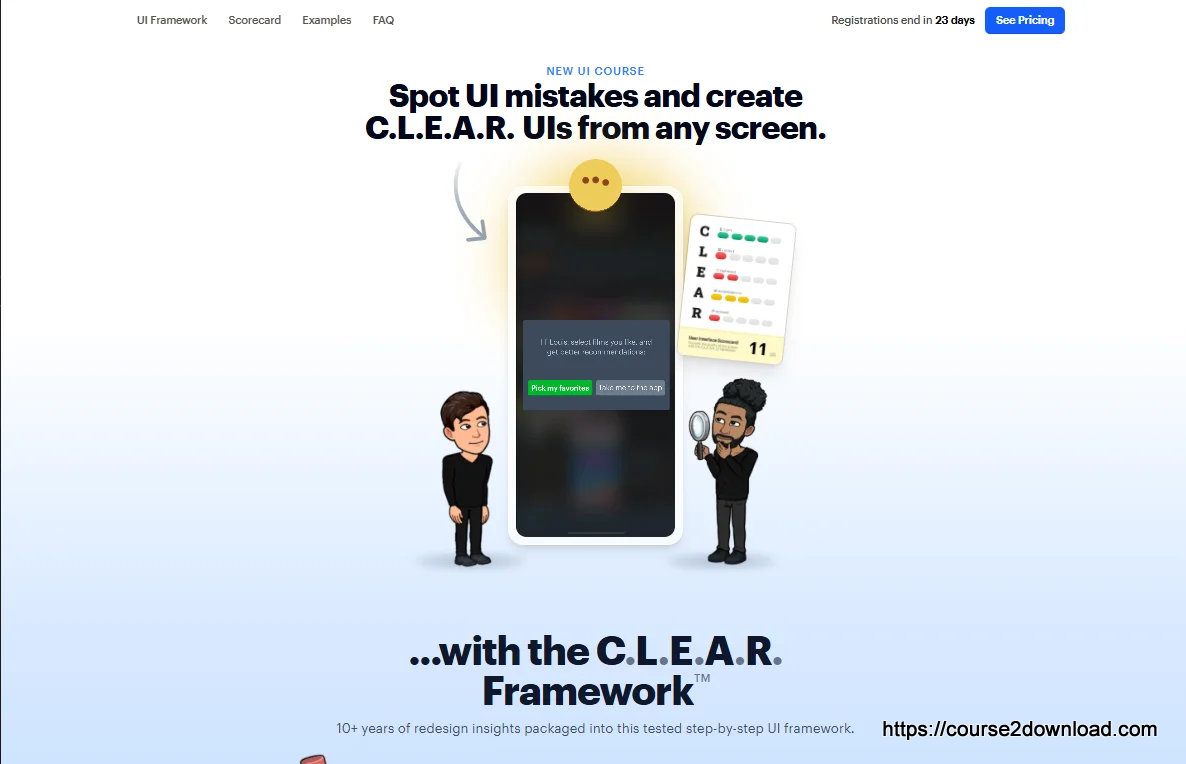
The Psychology of UI Design by Growth Design is an industry-leading educational framework created by Dan Benoni and Louis-Xavier Lavallée. It is designed to bridge the gap between creative design and behavioral science. By mastering these principles, product designers, marketers, and entrepreneurs can create user interfaces that don’t just look good, but actively drive user engagement, retention, and revenue.
Beyond Pixels: What is The Psychology of UI Design by Growth Design?
Growth Design is a discipline that sits at the intersection of Product Design, User Experience (UX), and Behavioral Economics. Traditional UI design focuses on how an interface looks. Growth Design focuses on how an interface performs.
The methodology taught by Growth Design is famous for its “Product Case Studies”—interactive, comic-book-style teardowns of world-class apps like Spotify, Tinder, and Airbnb. These studies reveal the invisible psychological triggers (and “dark patterns” to avoid) that dictate how we interact with technology.
Core Psychological Pillars of the Curriculum
To build a product that scales, you must understand the mental shortcuts (heuristics) that the human brain uses to process information. The Growth Design framework focuses on several key psychological concepts:
1. Reducing Cognitive Load
The human brain has a limited amount of processing power. When a UI is cluttered or confusing, it creates “Cognitive Load,” which leads to user fatigue and abandonment.
Hick’s Law: The time it takes to make a decision increases with the number and complexity of choices. Growth Design teaches you how to “chunk” information to keep users moving forward without friction.
2. The Power of “The Gap”
- Growth Design introduces the concept of the Product-Market Fit Gap and the User Journey Gap. By identifying the emotional state of a user at any given moment—whether they are feeling “Anxiety” about a price or “Excitement” about a feature—you can design UI elements that address those specific emotions.
3. Behavioral Triggers and Habits
How do you turn a one-time visitor into a power user? By understanding the Fogg Behavior Model:
The Psychology of UI Design course shows you how to design “Prompts” (notifications, badges, cues) that hit the user exactly when their motivation is high and the task is easy to perform.
Key Design Principles Explored
The Growth Design library features over 100+ cognitive biases. Here are the most critical ones that transform UI into a growth engine:
The Zeigarnik Effect: Our brains hate unfinished tasks. Growth Design shows how to use progress bars and “profile completion” percentages to trigger a subconscious need to reach 100%.
The Von Restorff Effect: Also known as the “Isolation Effect,” this principle suggests that when multiple similar objects are present, the one that differs from the rest is most likely to be remembered. This is essential for designing high-converting Call-to-Action (CTA) buttons.
Loss Aversion: Humans are more motivated to avoid a loss than to achieve a gain. Learning how to frame your UI copy around “Don’t miss out” rather than “Gain this” can radically shift conversion rates.
Social Proof: Integrating the “wisdom of the crowd” into the UI—such as “Join 5,000 other designers”—reduces the user’s perceived risk.
What Makes This The Psychology of UI Design by Growth Design Training Different?
Unlike static textbooks or academic courses, The Psychology of UI Design is built for modern practitioners who need to see immediate results.
Interactive “Case Study” Learning
Instead of watching boring lectures, students walk through “The Tale of Two Onboardings.” You see a “Before” and “After” of a user flow, with specific psychological biases highlighted at every click. This makes complex behavioral science easy to digest and even easier to apply.
Focus on Ethical Design
Growth Design places a heavy emphasis on distinguishing between “Green Patterns” (nudges that help the user reach their goals) and “Dark Patterns” (manipulative tactics that trick the user). They advocate for “Humane Design” that builds long-term trust rather than short-term clicks.
The Growth Design Gallery
Enrolling in the university or following their methodology gives you access to a curated vault of psychological “plays.” Whether you are trying to fix a high churn rate during signup or looking to increase the average order value in a checkout flow, there is a psychological play for that specific problem.
Who Should Study Growth Design?
UI/UX Designers: To move from being a “pixel pusher” to a “strategic product thinker” who can justify design decisions with data and psychology.
Product Managers: To better understand why certain features are failing and how to prioritize the roadmap based on user behavior.
Marketing Professionals: To create landing pages and funnels that align with how consumers actually make decisions.
Startup Founders: To build a “sticky” product from Day 1 without spending millions on trial-and-error marketing.
Summary of Psychological Impact
| Principle | UI Strategy | Expected Outcome |
| Aesthetic-Usability Effect | Creating a visually pleasing design. | Users perceive the product as more functional and are more tolerant of minor bugs. |
| Peak-End Rule | Designing a “Delight” moment at the end of a task. | Users remember the entire experience as positive, leading to higher retention. |
| Anchoring Bias | Placing a high-priced “Anchor” next to your target plan. | The target plan feels like a bargain, increasing the conversion of mid-tier subscriptions. |
| Occam’s Razor | Removing unnecessary elements from a dashboard. | Faster task completion and reduced user frustration. |
The Verdict: Is The Psychology of UI Design by Growth Design Worth It?
If you want to understand the “Why” behind the “What,” Growth Design is the definitive resource. It transforms UI design from a subjective art form into a predictable science. By applying the Psychology of UI Design, you aren’t just making things look better—you are making them work better for human beings.
In a world where attention is the new currency, understanding the psychology of your users is the ultimate competitive advantage. Growth Design doesn’t just teach you how to design; it teaches you how to influence.
Ready to Build Better Products?
Mastering the psychology of your users is the fastest way to grow your product and your career.


Reviews
There are no reviews yet.